Switchgear prices in India move when makers revise their published list prices, usually by product family, with an effective date announced to the channel. Raw materials, freight and range changes drive most revisions. A list increase does not always reach your net rate, because discounts move too, so track both before you change a buying plan.
How switchgear prices change in India
Switchgear is sold in India against published list prices. Each manufacturer issues price lists by product family — miniature circuit breakers and distribution boards in one, moulded case and air circuit breakers in another, motor control gear and relays in a third — and each list carries the date from which it applies. When a maker revises prices, it tells its distributors and dealers through a circular, issues a new edition of the list, and the new rates apply to orders billed after the effective date.
Three things are worth knowing about how that plays out:
- Revisions are partial. A maker rarely moves every line by the same amount. One family may rise while another holds, and a single family can move by different amounts for different frames and ratings.
- Revisions are not on a fixed calendar. Some makers revise once in a year, some more often, and the timing follows their costs and their competitors rather than a published schedule. The only reliable signal is the circular and the new list itself.
- A new generation resets the list. When a range is replaced by a new series, the new part numbers arrive with list prices of their own. Comparing an old part with its successor is not a price movement; it is a different product.
You can see how editions change for the makes we track on our brand price list pages: each keeps the newest PDF first and marks the editions it replaced, as on the ABB price lists and the Schneider Electric price lists.
Our view is that the price list edition belongs on every quotation, because without it a buyer cannot tell a price increase from a seller simply quoting a smaller discount.
What drives a switchgear price increase
Makers do not publish the reasons for a revision line by line, so any explanation is interpretation, not measurement. With that said, the cost of a breaker or a contactor is dominated by a handful of inputs, and a sustained move in any of them tends to show up in a later price list.
Common cost drivers behind switchgear list price revisions
| Driver | Where it sits in the product | Categories most exposed |
|---|---|---|
| Copper | Current paths, busbars, terminals, coils and windings | Cable, busbar systems, contactors, ACBs, current transformers |
| Silver | Contact tips, where the arc is made and broken | Contactors, MCCBs, ACBs, relays |
| Steel | Mechanisms, enclosures, mounting plates and frames | Distribution boards, panels, ACB frames |
| Moulding compounds | Breaker housings, insulating parts and covers | MCBs, RCCBs, MCCBs, wiring devices |
| Electronic components | Microprocessor releases, meters and numerical relays | Electronic-release MCCBs and ACBs, meters, protection relays |
| Freight, energy and labour | Manufacturing and distribution of the whole range | Every category, usually in smaller steps |
Two further drivers are less visible. Currency movements reach the parts of a range that use imported components, most often the electronics. And a maker rationalising a range — discontinuing slow-moving variants, or moving a family to a new generation — can raise the effective price of the variants that remain even when the list barely moves.
When we name a driver for a price movement we label it as our interpretation, and we suggest you treat any confident explanation of a revision, including a seller's, the same way.
Does a list price increase change what you pay?
Not always, and not by the same amount. A list price increase reaches your net rate in full only if the discount stays where it was. In practice the discount moves too:
How list price and discount combine into the net rate you pay
| What changes | What the price list shows | What happens to your net rate |
|---|---|---|
| List rises, discount unchanged | A higher list price from the effective date | Rises by the same percentage as the list |
| List rises, discount widens | A higher list price | Rises less than the list, or holds |
| List holds, discount narrows | No change at all | Rises, with nothing on the price list to show it |
| New generation replaces the old | New part numbers at new prices | Rises only when you move to the new series |
The third row is the one buyers miss. A seller whose own slab has been cut by the brand may narrow the discount they offer while the published list stays exactly the same. If you track only the price list, that increase is invisible to you.
The reverse also happens. After a list increase, competition between sellers sometimes widens discounts on fast-moving lines, so the net rate on a popular MCB rating may barely move while a slow-moving variant takes the full increase. Our guide to reading a switchgear quotation explains how list price, discount slab and net rate fit together.
This is why a price index should say plainly which price it measures: list price shows what the makers did, and only your quotations can show what the channel did with it.
What happens to your quotations when a price list changes
A revision reaches the quotations on your desk at different speeds, and knowing the sequence helps you read them.
- Before the effective date. Sellers usually learn of a revision from the maker's circular shortly before it takes effect. Quotations issued in that window may still be on the old list, but their validity is often shortened, or they carry a note that rates are subject to the new list.
- On the effective date. New quotations move to the new edition. Orders already accepted at a firm price normally keep it; orders priced at the rate ruling on dispatch take the new list when they ship.
- After the effective date. Stock a seller bought at the old list may still be sold at the old net rate for a while, which is one reason two sellers can quote noticeably different net rates on the same part in the weeks after a revision.
A quotation with an unusually short validity, or one that ends close to a date the seller will not explain, can be a sign that a revision is coming. It is a fair question to ask before you let the approval sit.
In our view a seller who knows a revision is coming should say so on the quotation: a buyer who is told can order inside the old list or budget for the new one, and either is better than finding out from a re-quote.
How to read a switchgear price index
A price index is only as good as its stated method. Before you rely on any figure for switchgear price movement — from a maker, a trade body, a seller or us — check that it answers these questions:
Questions to ask of any switchgear price index
| Question | Why it matters |
|---|---|
| Which price was measured? | List price and the transacted net rate can move in opposite directions |
| How many SKUs, from which brands? | A figure built on one brand's circular describes that brand, not the market |
| Which comparison dates? | A change measured across a revision date says more than one measured between revisions |
| What was excluded, and why? | Discontinued lines and one-off observations distort a median |
| Median or average? | A few large movers drag an average; the median shows the typical line |
| Is the count shown beside each figure? | A category median resting on a handful of SKUs is not a market figure |
| How many lines rose, fell and held? | The distribution says more than any single headline number |
Hold every index to those questions, including the circular a seller shows you to justify a new rate. An index that answers all seven is evidence; one that answers none is a sales message with a percentage in it.
If an index will not tell you its method, we would not use it to plan a purchase.
Why switchgear categories do not move together
A single headline figure for “switchgear prices” hides most of what a buyer needs. Categories respond to different inputs, so they move at different times and by different amounts.
- Copper-heavy lines. Cable, busbar systems, high-current contactors and air circuit breakers tend to respond most directly to copper, and their prices can move more than once in a year when the metal moves sharply.
- Moulded devices. MCBs, RCCBs and MCCBs carry more moulding, mechanism and silver relative to copper, and their revisions tend to arrive with the maker's general price list changes.
- Electronic products. Meters, numerical relays and microprocessor releases respond to component supply and currency rather than metal, and can hold steady while metal-heavy lines rise.
- Made-to-order equipment. Panels, APFC systems and large ACB configurations are priced per order, so they reflect input costs at the time of quotation rather than a published list.
The practical consequence: if most of your bill of materials is cable and busbar, a general switchgear index understates your exposure; if most of it is MCBs and distribution boards, it may overstate it. Weight any index you use by your own mix of categories.
In our view category figures with their counts beat one tidy number, because the tidy number is the one most likely to mislead a buyer.
How to track switchgear price increases yourself
You do not need an index to see what is happening to the prices you pay. Four habits are enough:
- Record the price list edition on every quotation and purchase order. When the next quotation arrives on a newer edition, you will know a revision has happened.
- Ask for list price and discount separately on every line, not just the net rate. Then you can see whether a change came from the maker's list or from the seller's discount.
- Keep a short watch list of the ten or fifteen part numbers that make up most of your spend, and note their list price and your net rate each time you buy.
- Compare editions directly when a maker publishes a new list. Our price lists by brand keep earlier editions beside the newest, so you can check a family against the edition it replaced.
It is not glamorous work, but in our view a buyer with a watch list of fifteen part numbers knows more about their own price exposure than any index can tell them.
Protecting a project budget from a price increase
On a project that runs for months, a list price revision between quotation and delivery is likely rather than unusual. The protection is in the terms, not in guessing the timing.
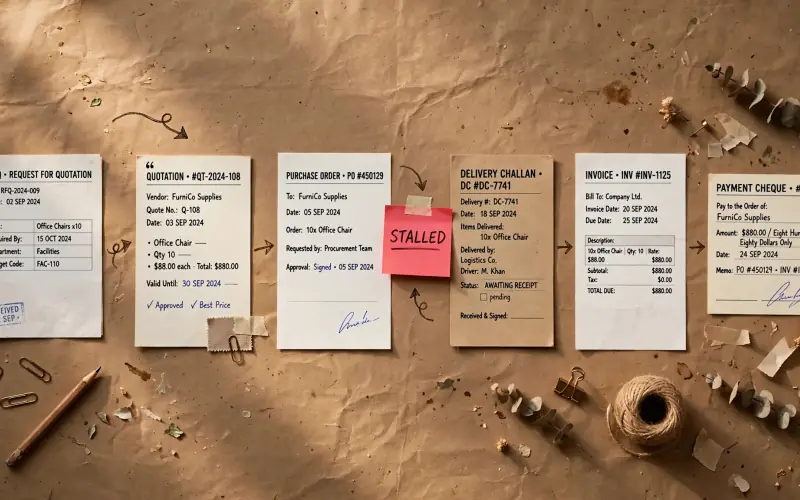
- Order inside quotation validity. An approved quotation that waits for a purchase order past its validity can be re-quoted on the new list. Approval delay is the commonest way buyers absorb an increase they could have avoided.
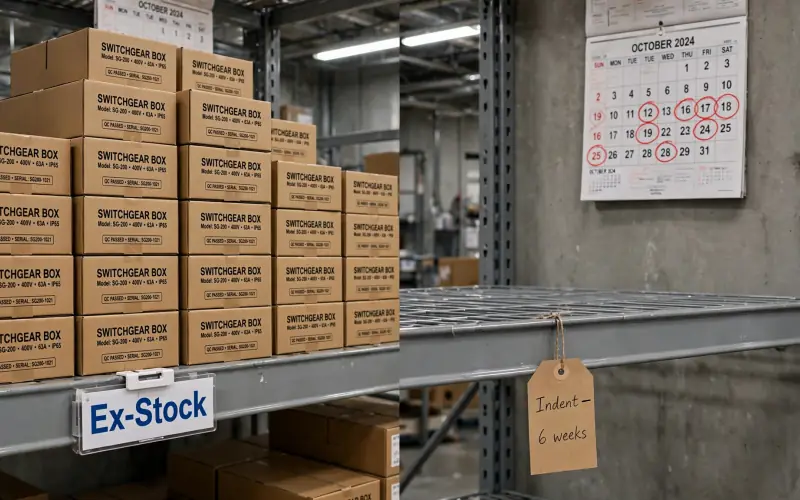
- Agree the price basis. For indent lines with long lead times, agree in writing whether the rate is firm to delivery or follows the list in force on the dispatch date.
- Use a price variation clause on large contracts. Many Indian contracts for electrical equipment link price changes to published raw-material indices, often through the price variation formulas issued by IEEMA, so both sides know in advance how a cost movement will be shared.
- Buy forward only what is confirmed. Bringing an order forward ahead of an announced revision can make sense for quantities a project has already committed to. Forward-buying a year of stock against one quarter's movement ties up cash, storage and warranty time on a forecast that may not hold.
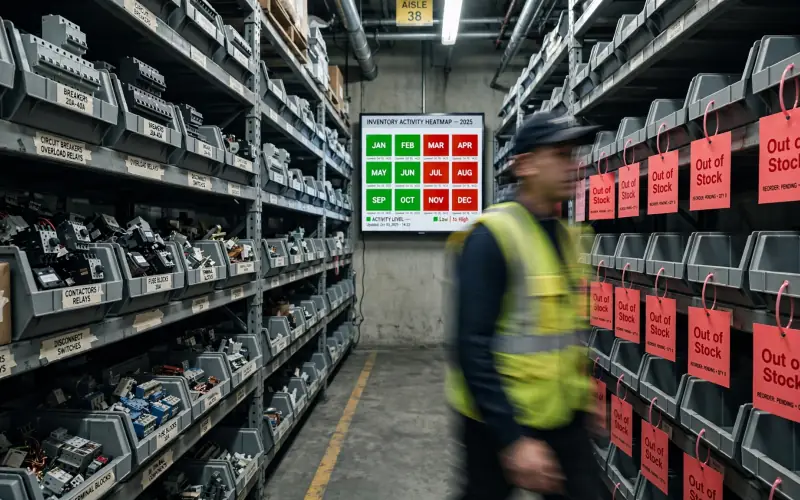
For the stages where these terms are agreed — quotation, purchase order and invoice — see our guide to the electrical procurement process. Where availability rather than price is the risk, see stock-out patterns in electrical components, and for how to plan to dispatch dates, switchgear lead times.
Our advice is consistent: protect the budget with validity and price basis, not with speculation about the next circular.
Our position
A price index is worth only its stated method, and most price trends published in this trade are one brand's circular reported as the market. An honest one says which price it measures, because list price is not what anyone pays. The discount slab moves too, and it can move the other way, so a rise in list can sit on top of a flat net rate. That limitation belongs in the headline, not in a footnote.
An honest index also refuses to flatter its own catalogue. The categories where a seller holds the least depth are the ones with the fewest observations, and a median resting on a handful of SKUs is not a market figure, which is why the count belongs beside every median, including the embarrassing ones. A driver named for a mover — copper, silver on contact tips, steel, a brand rationalising a series — is interpretation, and should be labelled as interpretation. The table is the measurement.
The buyer's mistake is directional: reading one quarter's median as a forecast and forward-ordering a year of stock against it. Categories do not move together, and the one you buy most may be the one that held.
Questions buyers ask
Why do switchgear prices increase in India?
Most increases follow input costs — copper, silver, steel, moulding compounds, electronic components, freight and energy — together with range changes such as a move to a new generation. Makers revise their published list prices by product family, and the change applies from the effective date in the circular.
How do I know if a switchgear price increase has been announced?
Makers notify their channel partners by circular and publish a new edition of the price list with an effective date. Ask your seller which edition their quotation is based on, and compare it with the newest edition on the maker's site or on our brand price list pages.
Does a price increase apply to orders already placed?
That depends on your purchase order terms. A firm-price order accepted within quotation validity normally holds; an order placed after validity lapses, or one priced at the rate ruling on dispatch, can take the new list. Agree the price basis in writing before you order.
Should I buy switchgear before a price increase?
Only for quantities you are certain to use soon. Buying ahead of an announced revision can save on confirmed project needs, but stockpiling against a forecast ties up working capital and storage, and starts warranty periods on equipment that may sit on a shelf.
What is a switchgear price index?
A measure of how prices across a set of switchgear products changed between two dates, usually reported as a median percentage by category and brand. It is only useful when it states which price it measured, how many products it covers and what it excluded.